Peakboard hub
Connections
In the Connections menu item you can create connections to different data sources and use them later in the Peakboard Designer.
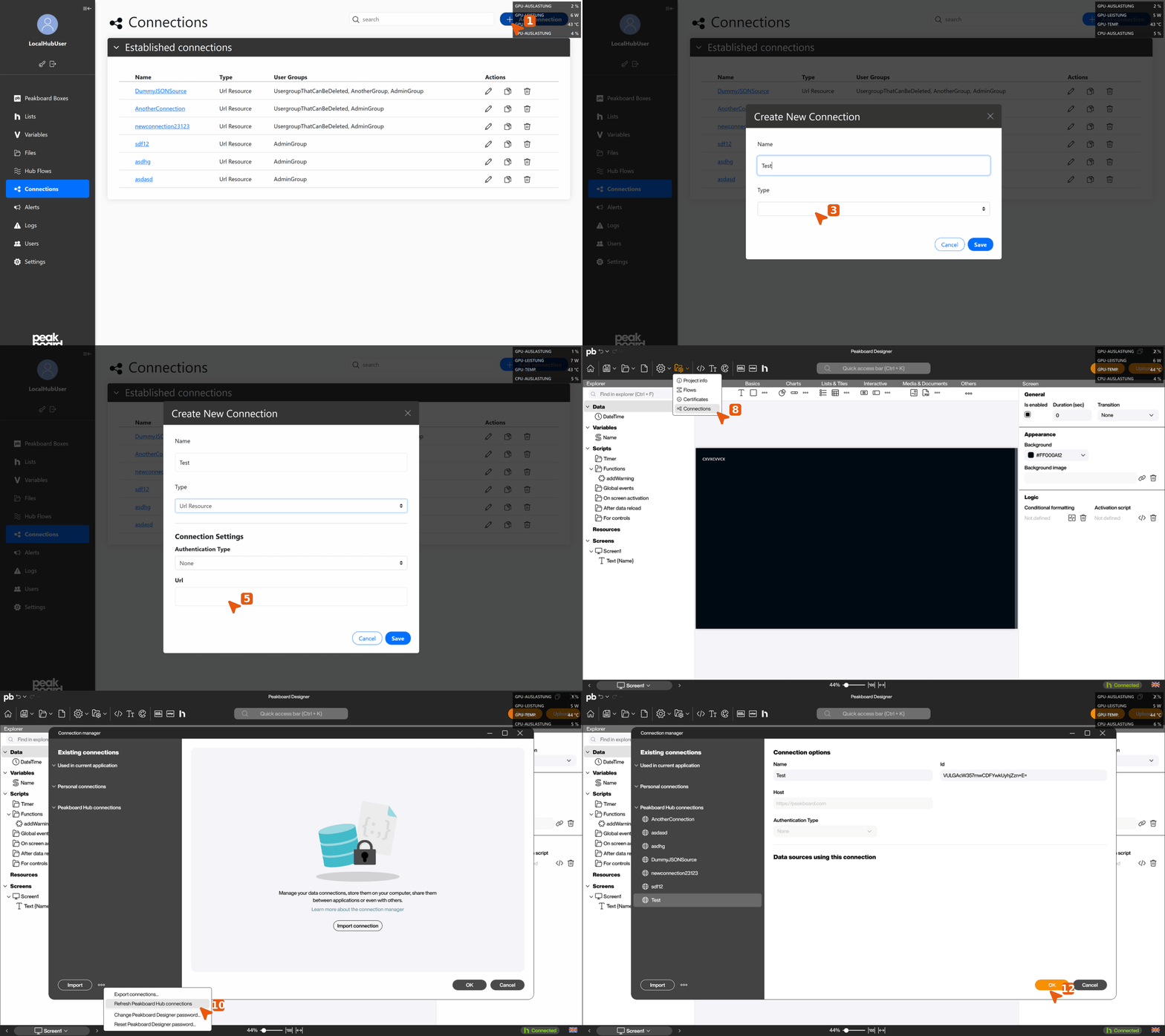
Create connection in Peakboard Hub
- Add new connection: Click the [Add connection] button in the upper right of the Peakboard Hub interface.
- Enter connection details: In the [Create New Connection] dialog, enter a name and select the connection type.
- Select connection type: The following types are available: Mail (email connections), ODBC (database connections), Oracle Server (Oracle databases), SQL Server (Microsoft SQL Server), SAP (SAP systems), Url Resource (web-based resources) and Domain User (domain authentication).
- Configure settings: Adjust the settings based on your resource type.
- Save connection: Click [Save] to create the connection.
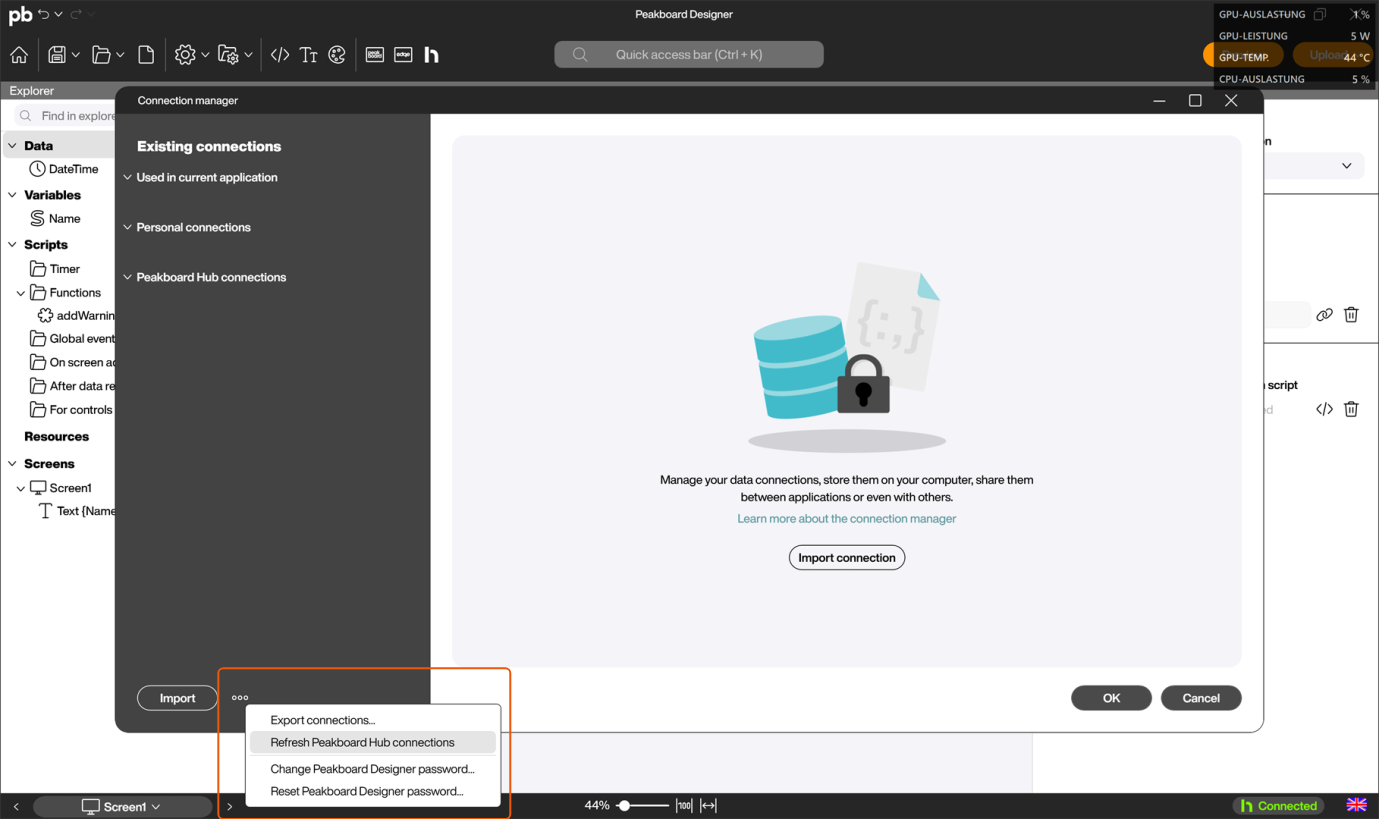
Use connections in Peakboard Designer
- Open project settings: Access the project settings via the gear icon in the toolbar.
- Access connections section: Select [Connections] from the dropdown menu.
- Open connection management: Click the [Import] button in the connection management area.
- Refresh Hub connections: Select [Refresh Peakboard Hub connections] from the context menu to load the current connections.
- Select your connection: Your newly created connection appears in the [Peakboard Hub connections] list.
- Confirm selection: Click [OK] to integrate the connection into your application.
The connection is now available for use across applications and centrally managed via Peakboard Hub.